

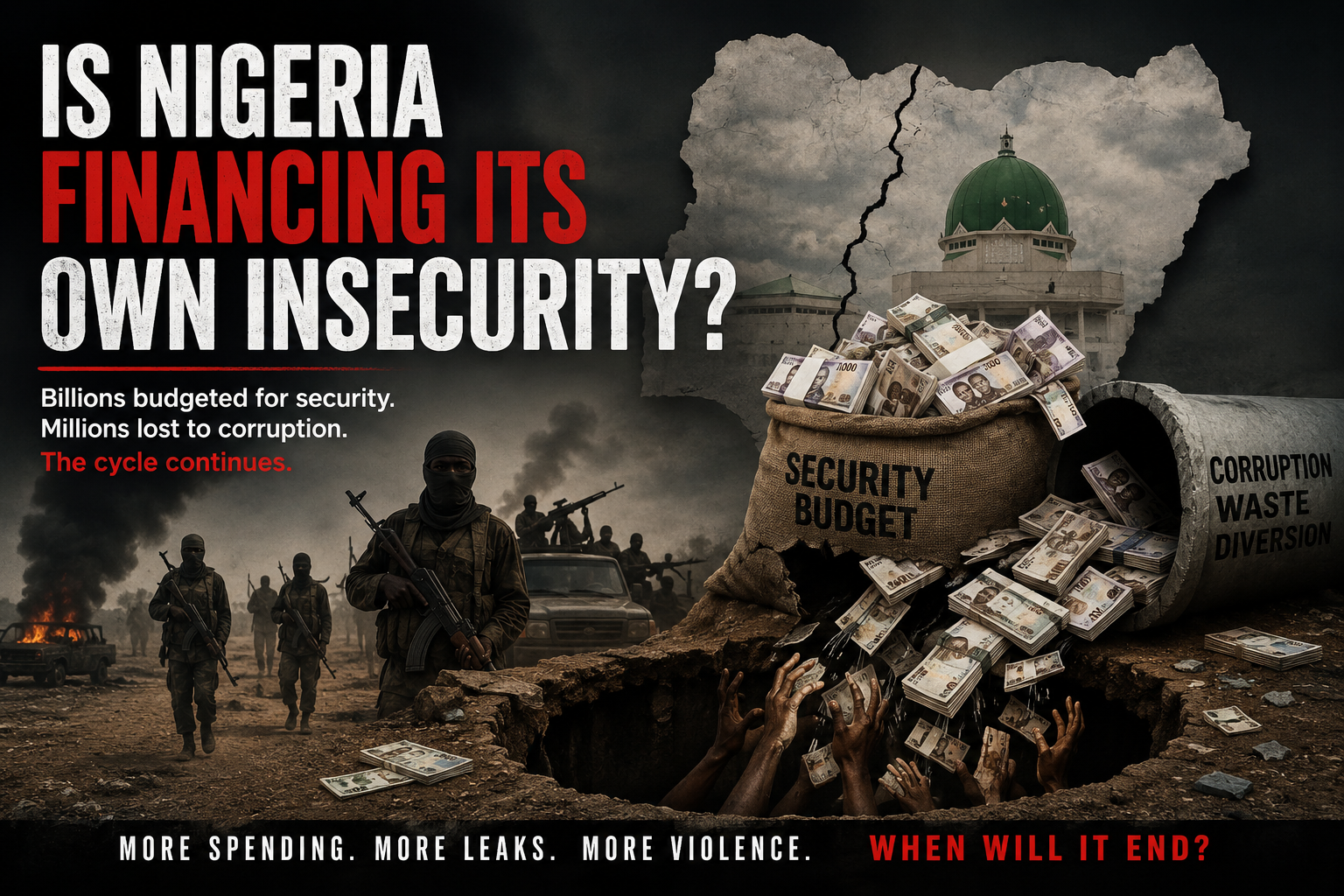
Is Nigeria Financing Its Own Insecurity?
Paul Okojie
When a father don’t discipline his children early in their life, they become his problem at his old age, that’s the case of Nigeria today. Nigeria’s security crisis has reached a level where difficult questions must be asked and uncomfortable truths confronted. The continued rise in kidnapping, banditry and terrorism across the country raises concerns not only about the capacity of the state to protect its citizens but also about the forces sustaining these criminal enterprises.
Across many parts of the federation, kidnapping has evolved into a lucrative industry. Criminal gangs now view human beings as commodities, reducing innocent citizens to bargaining chips in a dangerous marketplace of fear. Families, communities and organizations are routinely compelled to pay huge sums of money to secure the release and freedom of loved ones after horrific treatments. While such actions are often driven by desperation, the broader implications for national security cannot be ignored.
Every ransom paid to kidnappers potentially strengthens the operational capacity of criminal networks. The funds generated from these criminal activities can be used to recruit members, purchase communication equipment, establish intelligence networks and, most importantly, acquire weapons. The result is a vicious cycle in which kidnapping finances the tools needed for more kidnapping, terrorism and violent crime.
The proliferation of small arms and light weapons has become one of the most alarming consequences of this cycle. Nigeria’s porous borders, weak enforcement mechanisms and thriving black market have contributed to the widespread availability of firearms. Weapons that find their way into the hands of terrorists and kidnappers rarely remain confined to a single criminal operation. They circulate across regions, fueling armed robbery, communal clashes, political violence and insurgency.
The danger is not merely the presence of weapons but the normalization of violence they bring. Communities that once depended on traditional conflict-resolution mechanisms now increasingly confront armed actors with superior firepower. This development threatens the authority of the state and undermines public confidence in law enforcement institutions.
Equally troubling is the growing division that insecurity is creating among Nigerians. Criminal violence often triggers ethnic, regional and religious accusations that deepen existing fault lines. Instead of uniting against criminality, communities frequently retreat into suspicion and blame. Such divisions serve only the interests of those who profit from instability.
It is therefore legitimate to ask who benefits from the continuation of insecurity. Criminal syndicates certainly profit. Arms traffickers profit. Those engaged in illicit financial transactions profit. While there is no publicly available evidence to support sweeping accusations against specific individuals or groups, history teaches that prolonged insecurity often creates beneficiaries whose interests are tied to the persistence of conflict.
This reality underscores the need for more robust investigations into the financing of terrorism, kidnapping and organized crime. Security agencies must not focus solely on the foot soldiers carrying weapons. Greater attention must be directed toward the financiers, suppliers, collaborators and facilitators who make these criminal activities possible.
Nigeria must also resist the temptation to allow insecurity to push citizens toward widespread civilian armament. As frustration grows, some communities may seek to acquire weapons for self-defence. While understandable, such a development could create even greater instability and lead to a future where armed groups operate beyond effective state control.
The challenge before the nation is clear. Government must strengthen intelligence gathering, improve border security, disrupt illicit financial networks, prosecute arms traffickers and invest in community-based security structures. Equally important, Nigerians must reject narratives that seek to divide the country along ethnic or religious lines whenever criminal incidents occur.
The battle against insecurity is not simply a military struggle. It is a fight for national cohesion, public trust and the future of the Nigerian state. If kidnapping remains profitable and illegal weapons continue to flow freely, the crisis will deepen. But if the financial and logistical lifelines sustaining criminal organizations are severed, Nigeria can begin to reverse the tide.
The time has come for decisive action. The nation cannot afford to remain trapped in a cycle where fear finances violence and violence generates even greater fear. To do so would be to risk allowing insecurity to become a permanent feature of Nigerian life.