

Babachir Lawal’s Warning: Why Nigerians Must Fight for Their Future
Paul Okojie
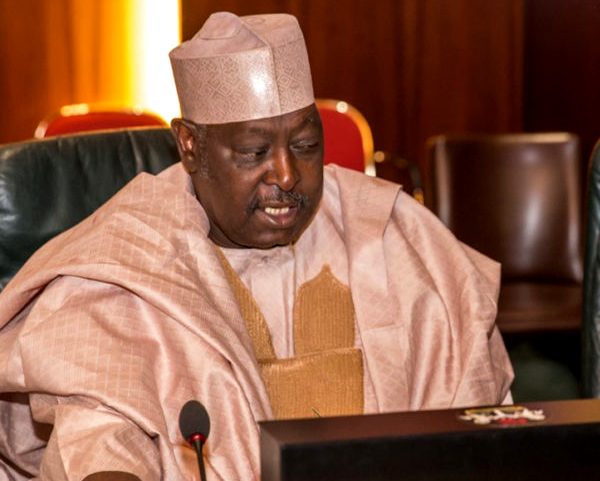
The Former Secretary to the Government of the Federation, Babachir Lawal, has once again stirred national debate with a wide-ranging interview in which he criticized President Bola Ahmed Tinubu’s leadership, questioned the administration’s direction, expressed concerns about governance, and urged Nigerians not to remain passive in the face of national challenges. His remarks have generated sharp reactions across the political divide, with supporters dismissing them as politically motivated while critics of the government see them as a reflection of growing public frustration.
Regardless of where one stands politically, the interview raises a broader issue that deserves serious reflection. Democracies do not thrive because governments are always right; they thrive because citizens retain the courage to question authority, demand accountability, and insist that public institutions work in the interest of the people. But in the present administration of Tinubu Nigerians have become increasingly docile and inactive.
Lawal’s comments should not be accepted uncritically as established fact. Several of his assertions are personal opinions and allegations that remain disputed and have not been independently verified. But Nigerians should consider his deposition as a former SGF. And the value of his interview lies less in the personalities involved than in the questions it forces Nigerians to confront.
The Nigerian Constitution places sovereignty in the people. That sovereignty is exercised not only through elections but also through continuous civic engagement. Citizens have the right and indeed the responsibility to question government policies, challenge decisions through lawful means, and hold elected officials accountable for campaign promises.
When Lawal urged Nigerians to “fight for their life,” such language should be understood within the boundaries of constitutional democracy. The fight that Nigeria needs is not one of violence or insurrection. It is the struggle against poverty, unemployment, corruption, insecurity, injustice, and institutional decay. It is the fight to ensure that votes count, that public funds are prudently managed, that appointments reflect competence and national inclusion, and that no government becomes insulated from legitimate criticism.
History teaches that nations decline when citizens surrender their voices. Silence in the face of bad governance often emboldens impunity. Conversely, responsible civic participation has strengthened democracies around the world.
The Tinubu administration itself has repeatedly argued that its economic reforms require time and sacrifice before yielding sustainable results. Many Nigerians, however, continue to struggle with inflation, the rising cost of living, insecurity in several regions, and declining purchasing power. These realities naturally increase public scrutiny of government performance and make critical voices more prominent.
For President Tinubu, criticism from a former political ally should not merely be dismissed as opposition rhetoric. Every administration benefits from introspection. Governments earn public confidence not by silencing critics but by addressing legitimate concerns with transparency, measurable results, and inclusive governance.
For the opposition, criticism alone is insufficient. Democracy demands credible alternatives, coherent policy proposals, and constructive engagement rather than perpetual outrage.
For ordinary Nigerians, the lesson is perhaps the most important. Democracy cannot survive on election day alone. Citizens must remain informed, participate peacefully in public affairs, insist on accountability from every level of government, reject ethnic and religious manipulation, and defend the rule of law.
The future of Nigeria will not be determined solely by those in Aso Rock. It will also be shaped by whether Nigerians choose apathy or participation, fear or courage, silence or responsible civic engagement.
The fight for Nigeria’s future is not a call to violence. It is a call to constitutional action, democratic vigilance, and the unwavering belief that government exists to serve the people, not the other way around.