
Public Funds, Politics and Power: How State Resources Are Fueling Nigeria’s Electoral Crisis
By Paul Okojie,
In every functioning democracy, public funds are meant to build roads, equip hospitals, fund schools, improve security, and provide social welfare for citizens. In Nigeria, however, allegations surrounding the diversion and misuse of state resources for political campaigns and the pursuit of public office have become a recurring feature of the political system. What should serve the public interest is increasingly perceived as a tool for political survival and electoral dominance.
From federal to state levels, the use of government resources to finance elections, mobilize political structures, influence delegates, and sustain incumbency has evolved into what many analysts describe as a dangerous political norm — one that threatens democracy, weakens institutions, deepens corruption, and undermines national development.
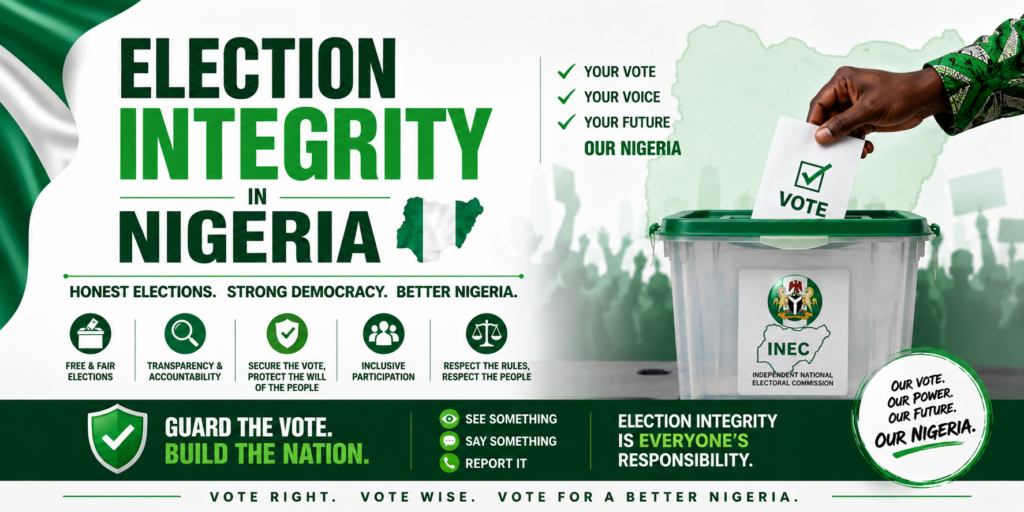
According to a 2024 report by the International IDEA titled Political Finance in the Digital Age: The Case of Nigeria, political finance regulations in Nigeria are routinely violated despite constitutional and electoral safeguards. The report noted that campaign finance laws and oversight mechanisms are frequently ignored “with impunity.”
The abuse of public resources during elections season is not new in Nigeria. A report by the Centre for Social Justice on the 2023 elections stated that incumbents often deploy state administrative and fiscal resources to secure electoral advantage. The report highlighted how public funds obtained through inflated contracts, kickbacks, and direct diversion from government budgets are allegedly funneled into political campaigns. An issue that is now becoming a beast that even ordinary Nigerians can no longer do without.
This pattern is deeply entrenched in present day Nigeria’s political culture. Long Government convoys, public media infrastructure, state-sponsored empowerment programmes, security apparatus, and even welfare initiatives are frequently accused of being repurposed for political mobilization during election cycles. Which most people in close quarters perceive as dangerous and harmful for the growth and democratic processes.
Most recently, many political analysts argue that the power of incumbency in Nigeria often provides access not only to state power but also to state wealth. As a result, elections are no longer simply contests of ideas, character or competence but battles of financial superiority. The candidate with access to the treasury, political patronage networks, and state structures often enjoys overwhelming advantages over opponents.
Research published by the Wilson Center observed that Nigeria’s electoral process has repeatedly witnessed allegations involving the diversion of state funds for campaign purposes, vote buying, and political patronage. The report warned that political finance corruption has severe consequences for governance, peacebuilding, and democratic stability.
One of the most visible manifestations of this system is vote buying. During elections, cash distribution, food sharing, and material inducements have increasingly become normalized. A study titled ‘Vote for Cash’ as an Emergent Paradigm of Electoral Corruption in Nigeria described vote buying as a major threat to democratic consolidation in the country.
The implication is clear: when elections are financed through public resources and won through monetary inducement, governance itself becomes transactional. Politicians who spend heavily to secure office often view public institutions as investment platforms rather than instruments of service. The consequence is widespread looting, abandoned projects, inflated contracts, and poor public service delivery.
Nigeria’s education, healthcare, infrastructure, and security sectors continue to suffer despite billions of naira allocated annually in budgets. Many critics have argue that a significant portion of public resources is diverted toward sustaining political machinery and engines of state rather than national development priorities.
The issue extends beyond campaign funding. The misuse of so-called “security votes” by state governors and discretionary funds allocated to top government officials with limited oversight, has also attracted scrutiny. An investigation referenced by the Organized Crime and Corruption Reporting Project cited concerns by Transparency International that such funds have become “slush funds for corrupt officials,” especially during election periods.
This culture has made politics in Nigeria very expensive to ordinary Nigerians who have to will and tamerity to service their communities. Academic studies on party financing and elections in Nigeria’s Fourth Republic conclude that many political parties and candidates routinely violate campaign finance regulations while relying on illegal and opaque sources of funding. The movement of bags of money around the country by political parties that cannot be accounted for or controlled by the banks but poor Nigerians cannot withdraw money from their own personal accounts due to limits set by the central bank.
The danger to democracy is profound:
First, it destroys electoral fairness. Opposition candidates without access to state resources are disadvantaged from the outset, creating an uneven political playing field. Democracy then shifts from competition based on ideas to competition based on financial control and state power.
Second, it encourages corruption in governance. Public office becomes an avenue for recovering campaign investments and funding future elections. This creates a vicious cycle where corruption finances politics, and politics protects corruption.
Third, it weakens public trust in democratic institutions. Citizens increasingly see elections as auctions rather than expressions of popular will. Voter apathy, political cynicism, and distrust in government grow when people believe outcomes are determined by money rather than merit.
Fourth, it fuels insecurity and political violence. Large sums of illicit political funds are often used to recruit thugs, arm gangs, influence local actors, and intimidate opponents during elections. In some regions, criminal networks kidnappers and cult groups become extensions of political structures.
Public discourse across social platforms also reflects growing frustration among Nigerians over the role of money in politics. Discussions on forums such as Reddit frequently describe vote buying and the use of public resources for political campaigns as a direct theft of citizens’ future development opportunities.
Nigeria’s laws already contain provisions against abuse of state resources and excessive campaign financing. However, enforcement remains weak. Regulatory institutions such as the Independent National Electoral Commission, anti-corruption agencies, and security institutions are often accused of selective enforcement or lacking the political independence needed to challenge powerful political actors.
If Nigeria is to strengthen its democracy and achieve meaningful development, the country must confront the dangerous fusion between public finance and political ambition. Stronger campaign finance transparency, independent audits of political spending, digital tracking of campaign donations, strict enforcement of electoral laws, and severe penalties for abuse of state resources are essential reforms.
Equally important is civic awareness. Citizens must begin to reject vote trading and demand accountability from political leaders. Democracy cannot thrive where public funds meant for development are converted into tools for electoral conquest.
The future of Nigeria’s democracy may ultimately depend on whether public office is restored as a platform for service rather than a gateway to political investment and personal enrichment.
Paul Okojie is a journalist/media consultant and a member of the Nigeria institute of international affairs(mniia), society of professional journalists(SPJ) and an associate member of the Nigeria institute of Public Relations(anipr).