

A Nation Borrowing Without Building
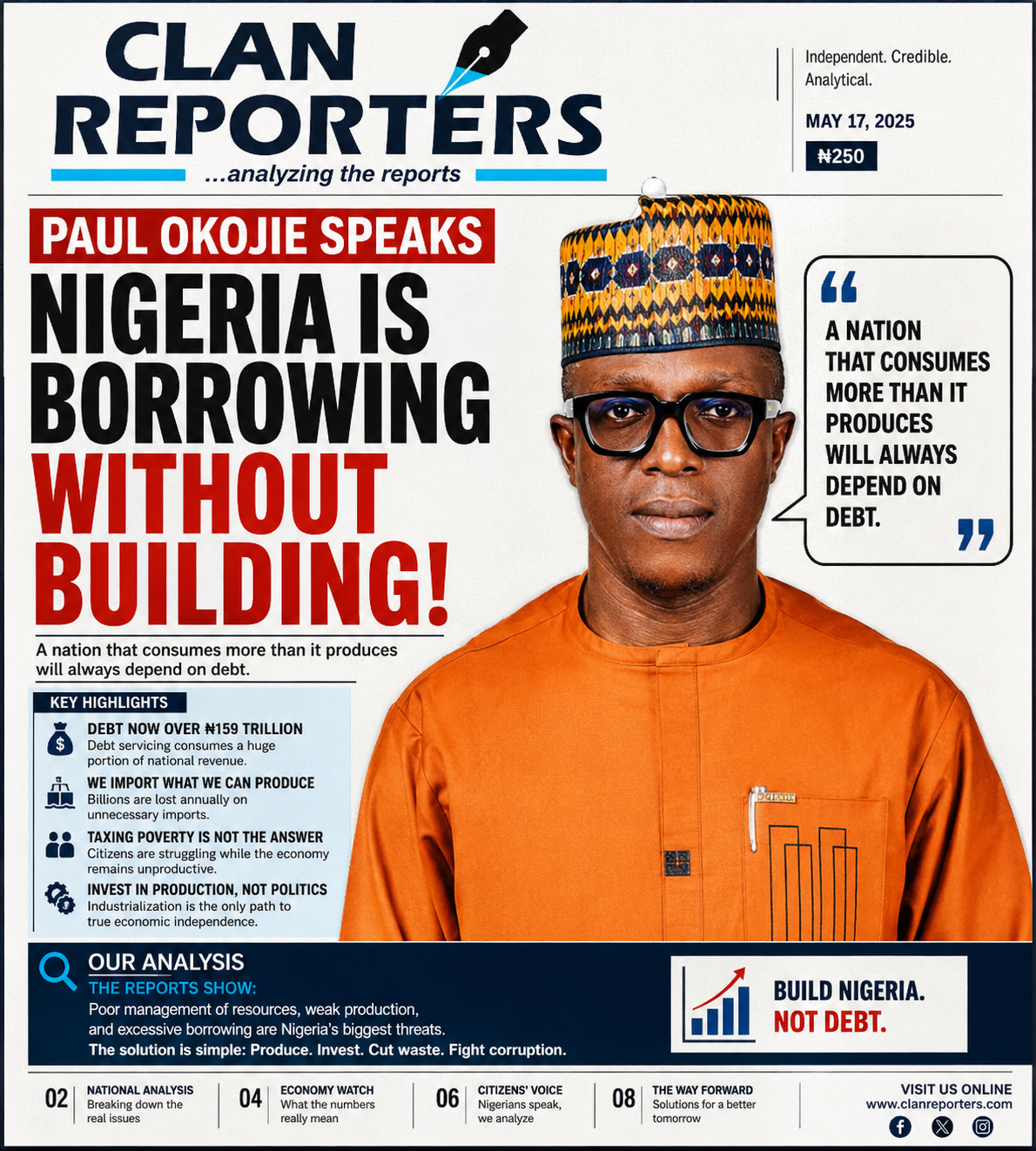
Nigeria is gradually approaching an economic crossroads that can no longer be ignored, politicized, or hidden behind optimistic government projections. The numbers seem frightening, but even more disturbing is the reality behind them: a nation richly blessed with oil, gas, fertile land, solid minerals, and human capital is sinking deeper into debt while producing less, importing more, and burdening citizens with increasing taxation and economic hardship.
Today, Nigeria’s public debt has climbed above N159 trillion, a figure that should alarm every serious policymaker and every patriotic citizen. Yet, beyond the staggering statistics lies the bigger tragedy, Nigeria is borrowing without building. The country is borrowing not primarily to industrialize, modernize infrastructure, expand exports, or develop productive sectors, but increasingly to survive, finance recurrent expenditure, and service older debts.
That is not economic development.
That is economic desperation. A nation’s debt is not necessarily a problem if such borrowing is tied to productivity and future growth. Countries around the world borrow. Developed economies issue bonds and take loans regularly. However, the difference is that productive economies invest borrowed funds into industries, technology, energy, transportation, manufacturing, education, and innovation capable of generating future wealth. Nigeria’s situation is tragically different.
For decades, successive governments have squandered opportunities presented by oil wealth. Billions of dollars earned during years of oil boom disappeared into corruption, white elephant projects, inflated contracts, subsidy fraud, and reckless political patronage. Despite earning enormous petroleum revenues over the years, Nigeria still imports refined fuel, struggles with electricity supply, and depends heavily on foreign goods that could easily be produced locally. This is the true definition of poor resource management. The result is now painfully visible.
As the naira continues to struggle under pressure. Inflation is choking households. Food prices are rising uncontrollably. Businesses are shutting down under the weight of energy costs and poor infrastructure. Unemployment remains dangerously high, especially among young people. Yet government after government continues to present borrowing as though it were a sustainable economic strategy, and It is not. The type of people we find in power today are more of diverting funds meant to grow economy into their private enterprise.
Perhaps even more troubling is the growing reliance on taxation in an economy where productivity itself is weak. Government appears increasingly eager to tax citizens without first creating the economic conditions necessary for prosperity.
However, Nigerians are already battling rising transport costs, poor salary, electricity tariffs, school fees, rent, inflation, and declining purchasing power. Imposing heavier tax burdens on a struggling population without corresponding industrial growth risks deepening poverty and widening public frustration, which will definitely lead to the increase insecurity. This present administration has shown crass disregard for the Nigeria people, who keeps seeking their attention to the myriad of economic problems and their ears have suddenly gone def.
Moreover, taxation works in productive economies where citizens earn decent incomes, industries thrive, and public services justify government demands. In Nigeria, many citizens see little evidence that their sacrifices translate into improved healthcare, better roads, reliable power supply, quality education, or security. What exists instead is a widening trust deficit between government and the governed.
The terrifying question now should be how can a nation tax its way out of underdevelopment while remaining largely unproductive with a burden of almost $12 Billion to service debt in just one year 2026. The danger ahead is clear. If Nigeria continues on this path of excessive borrowing, weak production, poor fiscal discipline, and policy inconsistency, the country risks entering a dangerous debt trap where future revenues are consumed almost entirely by debt servicing obligations.
Already, a frightening portion of government revenue goes into servicing debts rather than developing the nation.
This has severe implications for the future. Infrastructure development slows. Social services deteriorate. Investors lose confidence. Youth unemployment rises further. Crime and social unrest become more likely. The middle class shrinks while poverty expands.
Nigeria, is a nation that should be leading Africa economically instead it has been trapped in perpetual financial dependence.
The painful truth is that Nigeria does not merely have a revenue problem. Nigeria has a leadership, productivity, and management problem. The ruling Political class are mostly opportunist who take advantage of the weak Nigerians getting into Office and steal the resources of the people to enrich their self and their families. The most painful part of it all they love to give Nigerians rice, and the grains are not even produced and packaged in Nigeria.
The country cannot continue to consume what it does not produce. It cannot continue importing what it can manufacture locally. It cannot continue funding luxury governance with borrowed money while citizens endure worsening hardship. It cannot continue recycling poverty through poorly implemented economic policies disconnected from the realities of ordinary Nigerians.
The time has come for a complete economic rethink. The people who want to serve must be from those who understand the pain of the common Nigerian and must be prepared for the consequences of failing the people by not getting reelected or appointed in any public office.
The Nigerian Government must aggressively invest in production-driven sectors such as agriculture, manufacturing, technology, mining, and local refining. Cost of governance must be reduce drastically, and the savings should be transferred in transformational economic sectors.
Furthermore, the fight against corruption must be confronted beyond mere political slogans. Public funds must be transparently managed. Policies must encourage industrialization rather than suffocate businesses. Above all, leadership must begin to prioritize national development over political survival.
Nigeria still possesses enormous potential. But potential alone does not build economies. Vision, discipline, accountability, and productive leadership do. Fixing Nigeria must be by the people because the society of Nigeria raised its leaders.
To be honest, history will not be kind to leaders who inherited abundant resources yet left behind debt, poverty, insecurity, unemployment, and a weakened future for generations unborn. The so called reforms the leaders are proposing seem to be designed only for one ethnicity and religion.
The warning signs are already visible. What remains uncertain is whether those in power will act before the economic pressure becomes too heavy for the nation to bear and set Nigerians on the path of no return. It’s time for Nigeria Leaders to be responsible.