
Adulterated Drinks in Nigeria: NAFDAC, Unemployment and Criminal Enterprise
By Davidson Ogbebor
Nigeria’s growing battle against adulterated alcoholic drinks has become more than a public health concern. It is a reflection of the country’s regulatory challenges, economic hardship, unemployment crisis and the increasing difficulty faced by legitimate businesses trying to survive in a harsh operating environment. Behind every counterfeit bottle of wine, refilled spirit bottle or illegally manufactured alcoholic beverage lies a chain of activities that threatens public safety, undermines genuine investors and deprives the government of legitimate revenue. While the National Agency for Food and Drug Administration and Control (NAFDAC) continues its efforts to dismantle illegal production networks, the country must also confront the economic conditions that allow criminal enterprises to flourish.
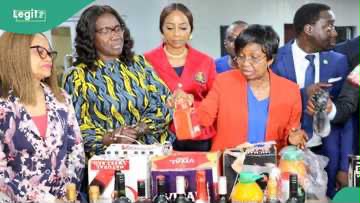
Recent reports of NAFDAC operations against alleged counterfeit alcoholic drink producers in Lagos have once again drawn attention to the scale of the problem. An operation at the Trade Fair Complex reportedly uncovered facilities where counterfeit wines and alcoholic beverages were allegedly produced and packaged under unhygienic conditions. Reports indicated that operatives discovered empty bottles associated with established brands, counterfeit labels and equipment used in the production and packaging process, leading to the arrest of suspects. Such discoveries suggest that the illicit trade is not simply the work of isolated individuals selling questionable products but may involve organised networks that exploit consumer trust and weaknesses in market surveillance.
The danger to public health cannot be overstated. Adulterated alcoholic beverages may contain unsafe concentrations of alcohol, harmful chemicals or contaminants introduced during improper production. Where toxic substances such as methanol are present, the consequences can include blindness, organ damage and death. Consumers who purchase these products may have no reliable means of knowing what they are drinking until they begin to experience adverse effects. In a country where many households are struggling with rising living costs, cheaper products can become attractive alternatives, making vulnerable consumers particularly susceptible to the activities of counterfeiters. The tragedy is that a product purchased to provide temporary enjoyment can become a source of permanent injury or even death.
NAFDAC therefore occupies a critical position in the protection of Nigerian consumers. Its responsibility goes beyond inspecting warehouses and sealing illegal factories. The agency must ensure that products entering the market meet applicable safety and quality standards, investigate suspected violations, trace the distribution channels through which counterfeit products reach consumers and work with law enforcement agencies to bring offenders to justice. Successful enforcement should not be measured solely by the number of raids conducted or bottles seized but by the extent to which criminal networks are dismantled and prevented from returning to business. Where investigations establish evidence of deliberate counterfeiting, the financial beneficiaries, suppliers of packaging materials and distributors should also be examined so that enforcement reaches beyond the immediate production sites.
However, the question Nigeria must confront is why illegal businesses continue to find opportunities in an economy where legitimate enterprises are struggling to survive. Counterfeit alcoholic drink producers operate outside the standards and obligations imposed on genuine manufacturers. A lawful producer must invest in suitable facilities, quality control, approved ingredients, packaging, registration, trained personnel and distribution. It must also contend with electricity costs, transportation expenses, taxes, expensive financing and fluctuations in the prices of raw materials. An illegal operator who ignores these obligations can significantly reduce production costs and sell products at prices that compliant businesses may find difficult to match. In effect, criminal enterprises gain an unfair commercial advantage by transferring the risks and costs of their activities to consumers, legitimate investors and the public healthcare system.
This is where Nigeria’s unemployment challenge and economic policies become relevant. Prolonged unemployment and underemployment do not automatically turn people into criminals, and the overwhelming majority of unemployed Nigerians remain law-abiding despite their difficulties. Nevertheless, when legitimate employment opportunities are scarce, access to capital is limited and the cost of establishing a small business becomes increasingly prohibitive, vulnerable individuals may become more susceptible to recruitment into illegal commercial networks. Some may be drawn into counterfeit production, distribution or sales because the immediate financial returns appear more attractive than those available through lawful work. The responsibility for such crimes remains with those who commit them, but government must recognise that economic exclusion can create conditions that criminal organisations are able to exploit.
Nigeria’s economic reforms have sought to address structural weaknesses and improve public finances, but their effects on households and businesses cannot be ignored. The removal of petrol subsidies, currency depreciation and high financing costs have contributed to pressures on operating expenses and purchasing power. Manufacturers face higher transportation and energy costs, while small businesses struggle to obtain affordable loans to expand their operations, purchase equipment or employ additional workers. Traders and distributors must contend with rising delivery costs, and consumers have less disposable income to spend on goods and services. When these pressures persist without adequate support for productive enterprise, businesses may reduce their workforce, postpone expansion or shut down altogether.
The danger is that criminal operators may exploit the gaps left by struggling legitimate businesses. When genuine manufacturers are forced to increase prices to reflect rising production costs, counterfeiters can use cheaper, unsafe materials and avoid regulatory obligations to undercut them. When lawful distributors struggle with transportation and financing expenses, illicit networks may continue operating through informal channels. When unemployment rises and small enterprises close, the pool of people searching for alternative sources of income expands. This does not establish that harsh economic policies are the sole cause of counterfeit production, but it demonstrates why economic hardship, weak enforcement and profitable illegal markets must be examined together. A government that seeks to eliminate criminal enterprises must not only punish offenders but also create an environment in which lawful businesses can compete and workers can find productive employment.
The challenge becomes more complicated when public health regulations affect entire categories of products and the livelihoods associated with them. Restrictions on certain alcoholic beverage packaging, for example, may be intended to reduce harmful consumption and limit access to inexpensive alcohol, particularly among young people. Such objectives deserve serious consideration. Yet manufacturers, distributors, retailers and transporters may also depend on these markets for their income. The solution is not to abandon necessary health regulations but to implement them transparently, consistently and with appropriate transition arrangements. Workers and small businesses affected by restrictions should have opportunities to retrain, adapt and move into lawful alternatives. At the same time, government must distinguish between compliant businesses adjusting to regulation and criminal syndicates deliberately manufacturing dangerous counterfeit products. These are fundamentally different situations and must not be treated as equivalent.
A sustainable response therefore requires a broader national strategy. NAFDAC must strengthen intelligence-led investigations, improve product traceability, expand public awareness and collaborate with the police, customs authorities and relevant state institutions. Investigations should follow the supply chain from the source of raw materials and counterfeit packaging to wholesalers, retailers and the financial beneficiaries of the trade. The government should also make regulatory compliance more accessible to legitimate small and medium-sized businesses through clear procedures, efficient administration and affordable testing services where feasible. Regulation must remain strict on public safety, but unnecessary bureaucratic obstacles and unpredictable costs should not become additional barriers to formal business operations.
More importantly, Nigeria must make productive employment and local industrial development central to its crime-prevention strategy. Investment in manufacturing, agriculture, packaging, logistics and technical education can create opportunities for young people who might otherwise remain trapped in precarious informal work. Access to affordable financing can help legitimate entrepreneurs establish businesses, while reliable electricity, improved transportation infrastructure and predictable taxation can reduce operating costs. Government should assess its economic policies not only by the revenue they generate or the immediate financial adjustments they achieve but also by their consequences for investment, job creation and the ability of businesses to survive. An economy that makes lawful production increasingly difficult while allowing criminal operators to evade the costs of compliance risks creating an uneven playing field that rewards illegality.
Consumers also have a responsibility to protect themselves and assist regulators. Nigerians should purchase alcoholic beverages from reputable sellers, examine packaging and labels, remain cautious of suspiciously cheap products and report suspected adulteration to NAFDAC. Manufacturers should strengthen their distribution controls and cooperate with investigations involving suspected counterfeits of their brands. Suspected poisoning must be treated as a medical emergency rather than an opportunity for informal experimentation with unknown substances. Public education is essential because enforcement becomes more effective when consumers understand the risks and know how to report suspicious products.
Ultimately, the proliferation of adulterated drinks in Nigeria raises a fundamental question about the relationship between public safety, economic policy and governance. NAFDAC must be empowered to identify dangerous products, dismantle illegal production networks and ensure that those responsible face the consequences of their actions. But raids and arrests alone cannot resolve the broader conditions that allow illicit enterprises to exploit economic hardship and weaknesses in legitimate markets. Government must also confront unemployment, high operating costs, limited access to finance and the barriers that prevent productive businesses from expanding.
Economic hardship cannot excuse the deliberate production of dangerous drinks, just as unemployment cannot justify poisoning consumers for profit. Those who engage in counterfeiting must be investigated and prosecuted in accordance with the law. Nevertheless, a serious government must understand that crime prevention requires more than punishment. It requires an economy in which honest entrepreneurs have a fair chance to succeed, workers can earn a decent living and consumers can trust the products they purchase.
The real measure of Nigeria’s success will not be the number of counterfeit bottles seized during enforcement operations but whether the country can build a system in which legitimate businesses thrive, employment opportunities expand and criminal enterprises lose the economic advantages that allow them to flourish. Protecting public health and creating economic opportunity are not competing objectives. They are complementary responsibilities of a government committed to the safety, dignity and prosperity of its citizens.