

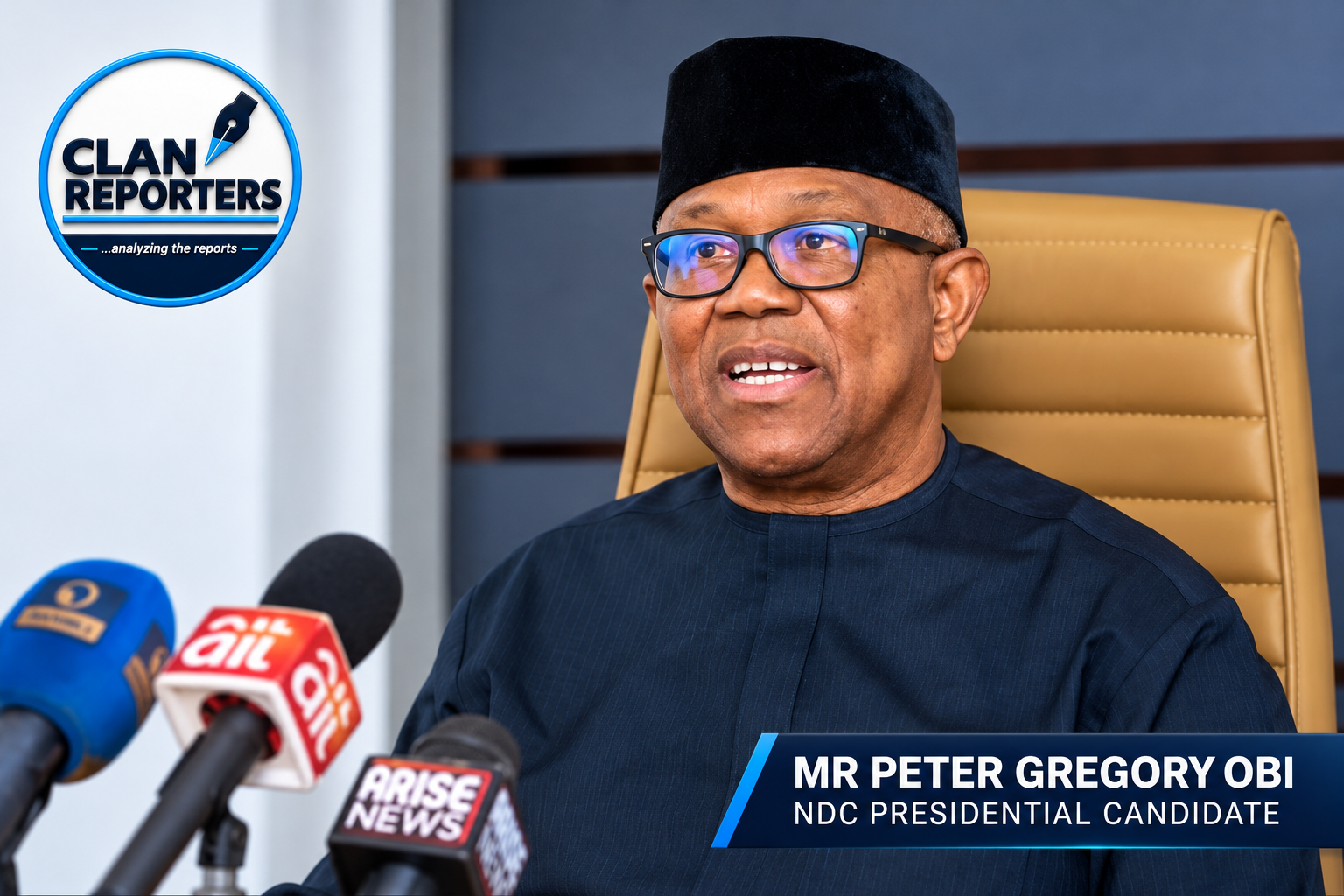
Peter Obi and the 2027 Presidency: Can a Vibrant Foreign Policy and a Nationwide Campaign Deliver Victory?
By Paul Omo Okojie
Nigeria’s 2027 presidential election will be more than a contest of personalities, political parties and campaign promises. It will be a test of whether any opposition candidate can transform public dissatisfaction into a disciplined national movement capable of winning votes across the country. For Peter Obi, the former governor of Anambra State and Labour Party presidential candidate in 2023, the road to the presidency will require much more than the enthusiasm that propelled his candidacy into national prominence. It will demand a clear national vision, a vibrant foreign policy, a formidable political structure and a campaign that connects Nigeria’s economic challenges to practical solutions.
As Obi campaigns across Nigeria, he has an opportunity to present himself not merely as a critic of the incumbent administration but as a presidential contender with a coherent plan for restoring confidence in Nigeria at home and abroad. A vibrant foreign policy could become an important part of that message. Nigeria needs a president who can rebuild international confidence, attract productive investment, negotiate favourable trade partnerships, protect Nigerians abroad and strengthen the country’s leadership in Africa. But foreign policy must not be reduced to diplomatic visits, international photographs or grand speeches. It must deliver measurable benefits to ordinary Nigerians.
Obi could distinguish himself by explaining how Nigeria would use diplomacy to expand non-oil exports, attract technology and manufacturing investment, strengthen regional security cooperation and negotiate better opportunities for Nigerian businesses. He could also outline a strategy for improving relations with African neighbours, revitalising Nigeria’s influence within the African Union and ECOWAS, and deepening partnerships with Europe, the United States, China and other major economic powers without compromising national interests. Such a programme would give substance to the argument that Nigeria’s international standing should translate into jobs, affordable goods, stronger institutions and greater national security.
Yet, foreign policy alone will not win the election. The Nigerian voter struggling with food prices, unemployment, electricity costs, insecurity, poor infrastructure and declining purchasing power will judge a presidential candidate primarily by whether his domestic programme is credible. Obi must therefore connect international partnerships to everyday economic realities. If he promises stronger trade relations, voters will want to know how Nigerian producers will benefit. If he speaks of attracting foreign investment, they will ask how that investment will create jobs rather than merely generate profits for a few companies. If he promises diplomatic leadership, Nigerians will expect it to reinforce security, economic growth and national dignity.

The 2023 election demonstrated that Obi could mobilise substantial support, particularly among younger voters and citizens demanding a departure from the established political order. His candidacy challenged conventional assumptions about political mobilisation and showed that a candidate outside the two dominant presidential parties could become a major force. However, the 2023 experience also exposed the limitations of enthusiasm without a sufficiently broad and resilient electoral coalition. National visibility, social media influence and passionate supporters are valuable assets, but they do not automatically translate into the votes required to win a presidential election.
In 2027, Obi’s chances will depend heavily on whether he can build a truly nationwide political organisation. Nigeria’s presidential contest is decided through a combination of national vote totals and constitutional requirements for the geographical spread of votes. A candidate must therefore compete seriously across the federation rather than rely on concentrated support in a handful of states or among particular demographic groups. Obi needs strong state-level leadership, functioning ward structures, trained polling agents, reliable voter mobilisation, legal and administrative teams, and a transparent system for monitoring results. These are not glamorous elements of politics, but they often determine the difference between a popular campaign and a successful one.
His campaign must also move beyond the assumption that young Nigerians will automatically support him again. Young people remain a potentially decisive constituency, but they are not a politically uniform group. They differ in occupation, religion, region, income, security concerns and expectations of government. Many want jobs, affordable education, accessible healthcare, reliable electricity and a credible pathway to homeownership or entrepreneurship. Others are concerned about insecurity, agricultural livelihoods and the survival of small businesses. Obi must demonstrate how his programme addresses these different realities while engaging older voters, rural communities, traditional institutions, organised labour, farmers, traders and professionals.
The question of political alliances will be equally important. Nigeria’s political landscape is shaped by regional interests, party machinery, influential political networks and negotiations that extend beyond campaign rallies. Obi will need to decide whether he can mount a credible independent opposition campaign or whether a broader coalition offers a stronger route to victory. Any alliance, however, must be judged by its electoral value, ideological compatibility and capacity to govern. A coalition assembled merely to defeat the incumbent could collapse under the weight of competing ambitions after the election. Nigerians need an opposition arrangement built around an agreed programme, transparent candidate-selection procedures and a credible plan for managing power.
Equally important is Obi’s ability to reassure Nigerians who remain sceptical of his candidacy. A serious presidential campaign must answer difficult questions about fiscal policy, federalism, public-sector reform, taxation, energy, security, industrialisation and the management of Nigeria’s diverse interests. It must explain not only what a new administration intends to do but how it will finance its commitments, which reforms will come first and how progress will be measured. A reputation for prudence can be politically valuable, but it must be supported by detailed policies, competent personnel and evidence that promises can survive the complexities of governing a country as large and diverse as Nigeria.
The electoral environment will also matter. Obi’s prospects cannot be assessed solely by his popularity or the strength of his campaign message. The conduct of political parties, the credibility of the Independent National Electoral Commission, the security of voters and electoral officials, the transparency of result collation and the willingness of political actors to respect the law will all shape the contest. His campaign should therefore invest in lawful voter education, independent result monitoring, trained polling agents and prompt legal responses to documented irregularities. Defending electoral integrity requires preparation before election day, not allegations and recriminations after the results have been announced.
Ultimately, Peter Obi’s chances of winning in 2027 remain a question of political execution rather than public enthusiasm alone. A vibrant foreign policy could strengthen his presidential message by showing how Nigeria can regain international respect and convert diplomatic relationships into economic opportunities. A nationwide campaign could broaden his appeal beyond his established support base. A credible coalition, a disciplined party structure and a detailed programme for economic recovery could make his candidacy more competitive. But none of these elements can substitute for the others.
The central challenge before Obi is to turn the promise of political change into an organisation capable of winning votes in every part of Nigeria. He must demonstrate that his candidacy can unite people across regional, religious, generational and economic divisions around a practical national agenda. He must also convince voters that his administration would be prepared to govern from its first day in office.
The 2027 election will not be won by nostalgia for 2023, online applause or the assumption that public anger automatically produces electoral victory. It will be won by the candidate who best combines credibility, organisation, alliances, policy clarity and effective engagement with voters. For Peter Obi, the opportunity remains significant, but the burden of proof is substantial. If he can match his message of domestic reform with a forward-looking foreign policy and a disciplined nationwide political structure, he could emerge as a formidable contender. If he fails to bridge the gap between popularity and organisation, the presidency may once again remain beyond his reach.