TINUBU AT BRICS SUMMIT: CALLS FOR EQUITABLE GLOBAL REFORMS IN GOVERNANCE, FINANCE, AND HEALTHCARE

President Bola Ahmed Tinubu has urged a fundamental reassessment of the current global governance structure, financial systems, and healthcare architecture, advocating for a more equitable and inclusive order that empowers low-income and emerging economies, especially in Africa.
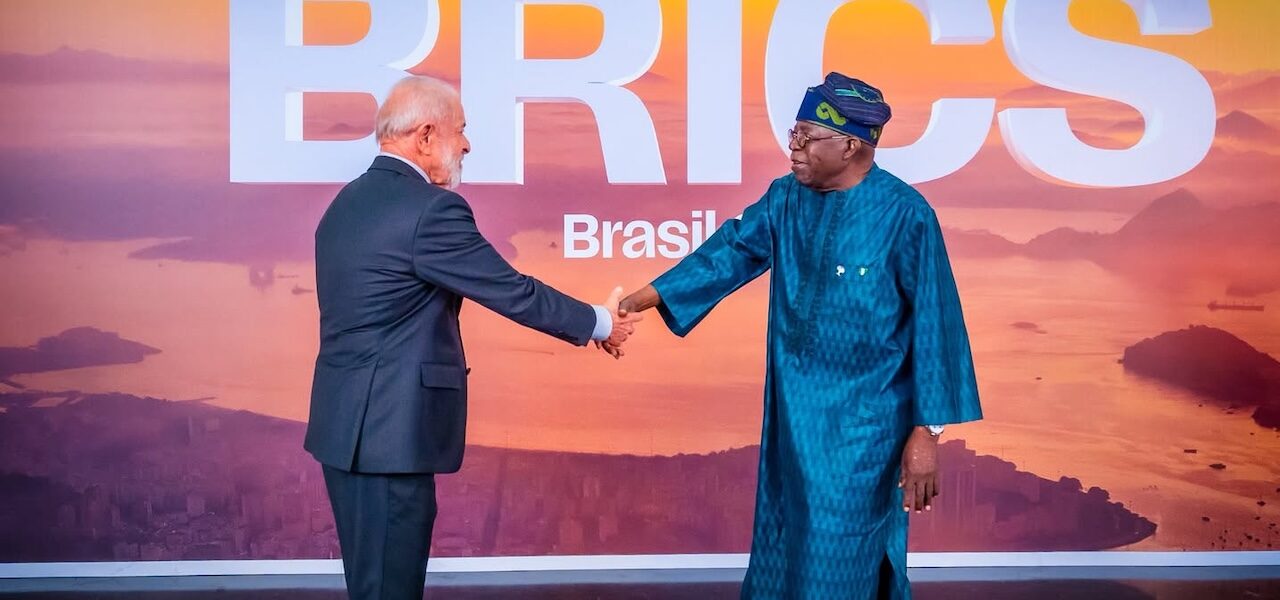
Speaking on Saturday at the 17th BRICS Summit held in Rio de Janeiro, Brazil, President Tinubu emphasized that shared global challenges—such as environmental degradation, the climate crisis, and growing health disparities—must receive urgent attention to drive sustainable development.
Invited by Brazilian President Luiz Inácio Lula da Silva, President Tinubu reiterated Nigeria’s strong support for BRICS’ vision of a collective, fair, and balanced global development agenda.
“Nigeria identifies with the ideals and outcomes expressed at this summit,” Tinubu stated. “Our global structure requires restructuring, especially in terms of finance and governance.”
Nigeria joined BRICS as a partner country in January 2025, alongside Belarus, Bolivia, Cuba, Kazakhstan, Malaysia, Thailand, Uganda, and Uzbekistan. The partner-country category was introduced during the 16th BRICS Summit in Kazan in October 2024.
Highlighting Africa’s disproportionate vulnerability to global environmental challenges, President Tinubu noted:
“Africa has contributed the least to global emissions but suffers the most from the effects. We need a new global justice model—one anchored in fairness, sustainable technology transfer, and accessible financing for emerging economies.”
He pointed to Nigeria’s role in driving regional climate action through initiatives such as the African Carbon Market Initiative and the Great Green Wall, expressing hope that COP-30 would consolidate global commitment to environmental transformation.
On financial reform and debt management, Tinubu said developing nations must be involved in shaping outcomes that reflect their realities.
“We cannot remain passive participants. Nigeria supports debt forgiveness, equitable climate financing, and healthcare reforms that reach the underserved.”
He also emphasized the need to prioritise youth-focused development, given that young people constitute 70 percent of Nigeria’s population.
“Nigeria’s Vision 2050 is our long-term compass. We’re accelerating renewable energy use, promoting nature-based climate solutions, and driving universal health coverage,” he said.
Addressing health concerns, President Tinubu urged that tackling non-communicable diseases must be a shared global priority.
“BRICS should be a platform not just for emerging economies, but for emerging solutions—solutions rooted in solidarity, sustainability, and shared prosperity.”
He concluded by reaffirming Nigeria’s unwavering commitment to strategic partnerships that lead to sustainable, inclusive development.
The President was accompanied to the summit by the Minister of Foreign Affairs, Ambassador Yusuf Tuggar, and the Minister of Finance, Mr. Wale Edun.
Brazil, which holds the rotating presidency of BRICS, formally announced Nigeria’s admission as a partner country on January 17, 2025. As Africa’s most populous nation and a leading continental economy, Nigeria shares core priorities with the BRICS bloc, particularly on South-South cooperation and global governance reform.
Bayo Onanuga
Special Adviser to the President
(Information & Strategy)
July 6, 2025