

WRAHP Launches ‘Sister Guardian’ Initiative to Mentor Young Women on Leadership in Avbiama Community
By Mercy Onyenweli
The Women’s Rights and Health Project (WRAHP), in collaboration with South SAHARA Social Development Organisation, has launched the Sister Guardian Initiative in Avbiama Community to mentor young women, build their confidence and encourage them to aspire to leadership positions.
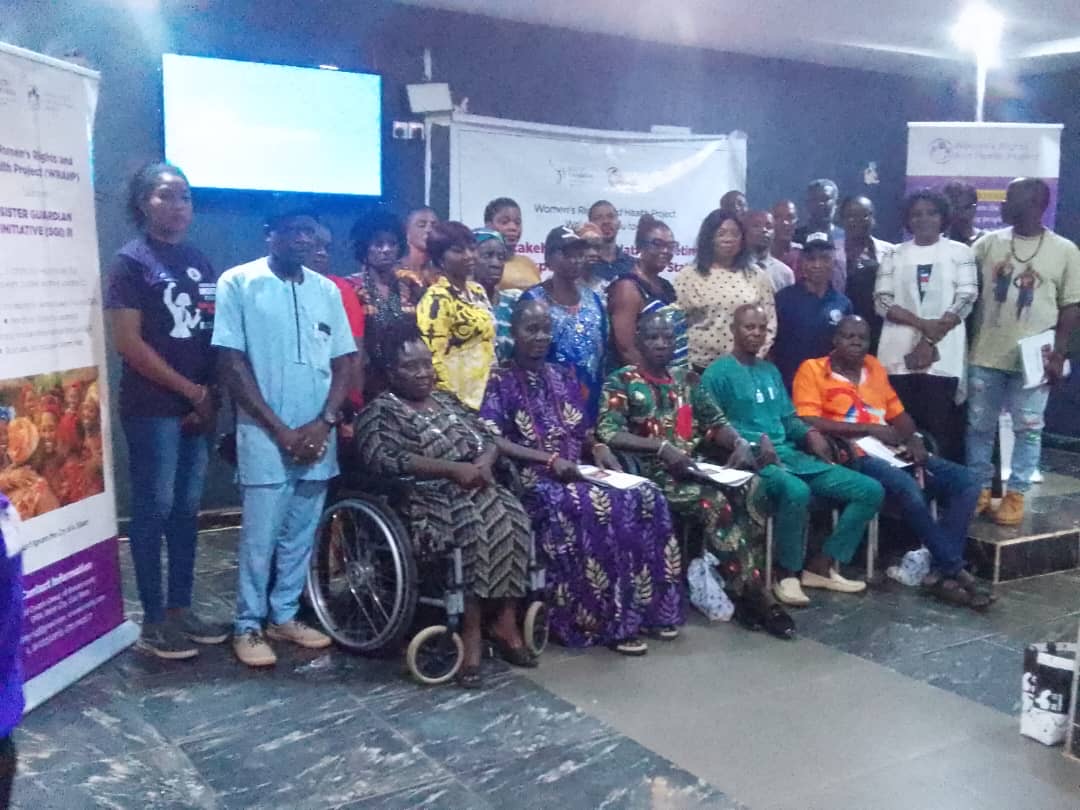
The initiative was unveiled during the second day of a stakeholders’ validation meeting organised to review findings from a Focus Group Discussion (FGD) conducted in the community to identify the causes of Gender-Based Violence (GBV), leadership gaps and other challenges affecting women and girls.
Presenting the FGD findings, Pastor Blessing Eromon said Avbiama Community was generally peaceful, with no significant cases of violence reported during the assessment.
She, however, identified a leadership gap among young females between the ages of 15 and 29, noting that many lacked the confidence to aspire to leadership positions despite the general support for women’s leadership within the community.
According to her, the situation requires deliberate intervention from parents and women leaders to encourage young girls to develop leadership aspirations, pursue education and build the confidence needed to participate meaningfully in community affairs.
Pastor Eromon also stressed that economic and educational empowerment of women could contribute significantly to reducing GBV, particularly conflicts linked to economic dependence and women’s limited ability to contribute to household welfare.
She further identified low awareness of the Sexual Assault and Prevention (SAP) Law among women in Avbiama as another critical gap requiring urgent attention.
Responding to the findings, the Okaighele of Avbiama Community reaffirmed the community’s commitment to supporting women and girls. He noted that the community had demonstrated this commitment by redirecting a scholarship slot initially allocated to women leaders for onward distribution to young girls.
He acknowledged, however, that a gap still existed in transferring leadership knowledge and experience from older women and community leaders to the younger generation.
The traditional leader assured stakeholders that the community would intensify efforts to bridge the gap and create more opportunities for young women to develop their leadership capacity.
Other stakeholders at the meeting called for the establishment of a structured step-down training programme that would equip young girls with the confidence, knowledge and leadership skills required to pursue leadership positions both within the community and beyond.
They also emphasised the need for parents to create an enabling environment where children, particularly girls, can freely speak out when confronted with challenges, abuse or other forms of vulnerability.
Speaking on strategies to reduce GBV, the Edo State Chairperson of the People Living With Disabilities, Comrade Ann, urged parents to prioritise the education of female children and begin building their confidence and awareness from an early age.
She noted that early education, empowerment and proper guidance would help girls understand their rights, develop self-confidence, resist abuse and participate actively in leadership and community development.
Earlier, the Edo State Project Manager of WRAHP, Comrade Sherita, commended stakeholders for their participation in the validation meeting and reaffirmed the organisation’s commitment to supporting the Sister Guardian Initiative.
She assured that WRAHP would continue to provide the necessary support to ensure that the initiative achieves its vision of empowering women and preparing young girls for meaningful leadership.
The validation meeting ended with a renewed commitment by stakeholders to strengthen mentorship, education, women’s economic empowerment and community support mechanisms as pathways to preventing GBV and nurturing the next generation of female leaders.