

The OK Realignment: A New Frontier in Nigerian Politics?
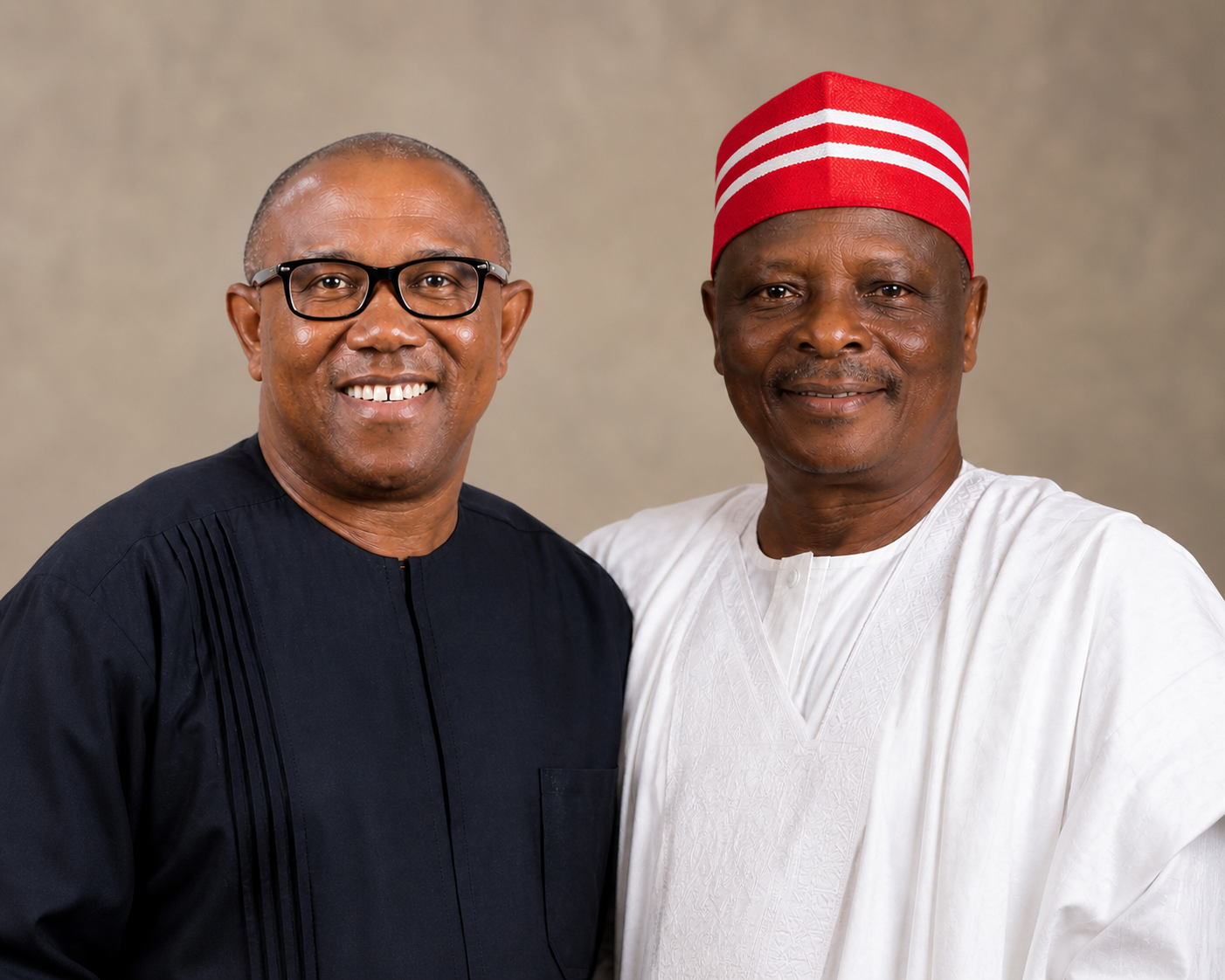
The Nigeria’s opposition politics may be entering another defining phase. The decision by Peter Obi and Rabiu Kwankwaso to formally align under the Nigeria Democratic Congress (NDC) signals more than a routine defection, it reflects a calculated attempt to re-engineer coalition politics ahead of the 2027 general elections. Their exit from the African Democratic Congress (ADC), amid deepening legal and structural crises, underscores a recurring pattern in Nigeria’s democratic evolution: the constant search for viable opposition unity against entrenched incumbency. The reflect how democracy can thrive.
From Fragmentation to Forced Alliances:
Since the return to civil rule in 1999, Nigeria’s political landscape has oscillated between dominant-party control and fragile opposition coalitions. The early years of the Fourth Republic were shaped by the dominance of the People’s Democratic Party (PDP), which maintained a near-hegemonic grip on power for 16 years. Opposition forces remained largely fragmented, often regional in outlook and limited in national reach.
That pattern shifted in 2013 with the formation of the All Progressives Congress (APC), itself a product of merger politics involving disparate blocs from the North and South-West. The APC’s eventual victory in 2015 demonstrated the electoral potency of coalition-building, setting a precedent that opposition actors have since sought often unsuccessfully to replicate.
The 2023 Electoral Lesson:
The 2023 general elections reinforced a familiar lesson: fragmentation within the opposition that benefited benefits the incumbent. Peter Obi, running on the platform of the Labour Party, galvanized an unprecedented youth-driven movement, particularly in urban centres and the South-East and South-South. Simultaneously, Rabiu Kwankwaso, under the New Nigeria Peoples Party (NNPP), consolidated a formidable base in Kano and parts of the North-West through the Kwankwasiyya movement.
Despite their individual strengths, the absence of a unified ticket split the opposition vote, ultimately paving the way for the APC’s victory. The outcome reaffirmed the structural disadvantage faced by disjointed opposition blocs in Nigeria’s first-past-the-post electoral system. The loss ended in the court and the case was lost due to the controlled system by the incumbent party.
The ADC Experiment and Its Collapse:
In the aftermath of 2023, efforts to construct a broader opposition alliance led key figures including Atiku Abubakar toward the African Democratic Congress (ADC). The party was envisioned as a neutral platform capable of accommodating diverse political interests without the baggage of legacy parties which has showed to be the same pattern of power control in internal party crisis.
However, as the ADC quickly descended into internal discord. Leadership tussles, factional claims to legitimacy, and protracted legal battles eroded confidence in the party’s stability. At various points, the Independent National Electoral Commission (INEC) was drawn into the dispute, raising questions about which faction held lawful authority. For political actors seeking certainty ahead of a tightly scheduled electoral calendar, the ADC became increasingly untenable.
The Strategic Pivot to NDC:
Faced with an approaching INEC deadline for party membership verification and candidate eligibility, Obi and Kwankwaso’s move to the NDC appears less ideological than tactical. It represents an effort to sidestep litigation risks and secure a clear institutional platform for 2027.
Beyond legal considerations, the realignment is rooted in electoral arithmetic. Obi’s appeal among younger, urban, and southern voters complements Kwankwaso’s entrenched grassroots machinery in the North. In theory, this fusion could approximate the kind of cross-regional coalition that has historically proven decisive in Nigerian presidential contests.
Risks Beneath the Opportunity
Yet, the move is not without complications. The departure of two major figures from the ADC risks deepening opposition fragmentation. With Atiku Abubakar still a central figure within the ADC orbit, and the PDP maintaining its own structure, the opposition could splinter into multiple competing fronts an outcome that has consistently advantaged incumbents.
There are also emerging concerns about the institutional robustness of the NDC itself. Questions surrounding its organizational depth, legal standing, and nationwide structure may yet pose challenges if not swiftly addressed. Building a party capable of absorbing and harmonizing two mass movements the “Obidient” and “Kwankwasiyya” bases would require more than symbolic alignment; it demands disciplined party architecture, clear leadership hierarchy, and conflict management mechanisms. There must be look out for those who would want to sabotage the system in favour of the incumbent because these are desperate times.
A Familiar Crossroads
Nigeria’s political history suggests that coalition-building is both necessary and inherently unstable. The APC’s own evolution from merger to internal contestation, illustrates how quickly alliances can fray once power calculations shift.
The “OK Realignment” therefore sits at a familiar crossroads: it could either crystallize into a credible national alternative or dissolve under the weight of competing ambitions and structural weaknesses.
Looking Ahead to 2027
For now, the shift to the NDC has achieved one immediate objective—it has moved the opposition narrative away from courtroom disputes and back into the arena of political strategy. Whether that momentum can be sustained will depend on the ability of Obi and Kwankwaso to translate personal followings into a cohesive, nationwide political machine.
As the countdown to 2027 begins, one question looms large: can Nigeria’s opposition finally overcome its historic fragmentation, or will this latest realignment become another chapter in a long cycle of missed opportunities?
Paul Okojie is a Journalist/Media Consultant