

ADC, Atiku and Obi Lead Protest Against INEC in Abuja
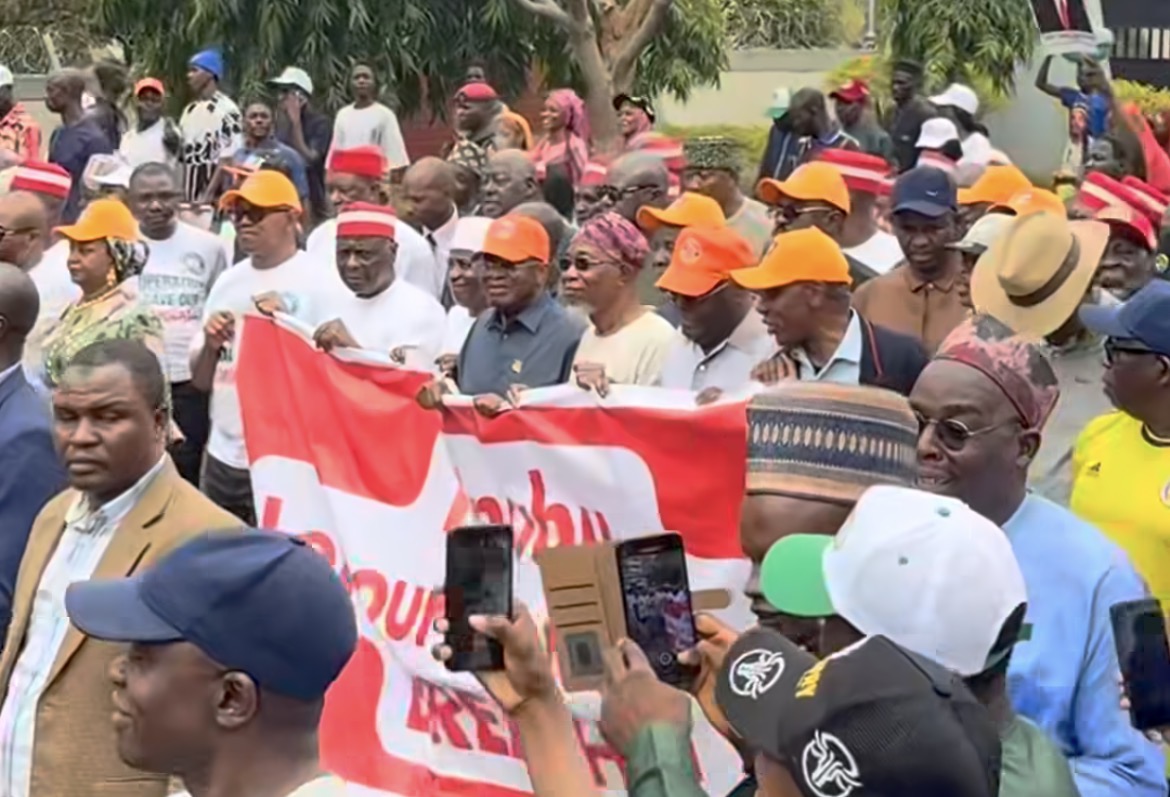
ABUJA — Prominent opposition figures, including former Vice President Atiku Abubakar and former Labour Party Presidential candidate Peter Obi on Wednesday led a coalition of politicians and supporters under the banner of the African Democratic Congress (ADC) in a protest in Abuja, accusing Nigeria’s electoral body of partisanship.
The demonstrators converged on parts of the Federal Capital Territory in what organisers described as a peaceful civic action aimed at defending Nigeria’s democracy and electoral integrity. The protest was directed at the Independent National Electoral Commission (INEC), which the opposition alleges has failed to act impartially in recent decisions affecting party leadership disputes.
Mr. Abubakar, who recently aligned with the ADC as part of a broader opposition coalition ahead of the 2027 general elections, said the protest was necessary to “safeguard democracy and prevent the enthronement of dictatorship.”
Also reported to have participated were other high-profile political actors within the opposition bloc, including former governors and party chieftains, underscoring the growing political weight behind the agitation.
The protest follows rising tensions between the ADC and INEC over the commission’s handling of the party’s internal leadership crisis. Party stakeholders have accused INEC of overstepping its constitutional boundaries by allegedly interpreting court rulings and recognising disputed factions within the party.
Earlier in the week, the ADC youth wing had issued a 72-hour ultimatum to INEC, demanding the recognition of a faction led by former Senate President David Mark, warning of nationwide protests if their demands were not met.
Wednesday’s demonstration, therefore, marks an escalation of that threat, with protesters carrying placards and chanting slogans calling for electoral neutrality and institutional accountability.
Organisers maintained that the protest was non-violent and framed it as part of a broader democratic struggle to resist what they described as attempts to undermine opposition parties and tilt Nigeria toward a one-party state.
As of press time, INEC had yet to issue an official response to the protest, while security presence in Abuja remained visible but largely restrained, with no reports of clashes.
Political analysts say the development signals intensifying opposition mobilisation ahead of the 2027 elections, with the ADC increasingly positioning itself as a central platform for anti-establishment political forces in Nigeria.