
Gov. Okpebholo Orders Expanded Talks on Edo Power Crisis
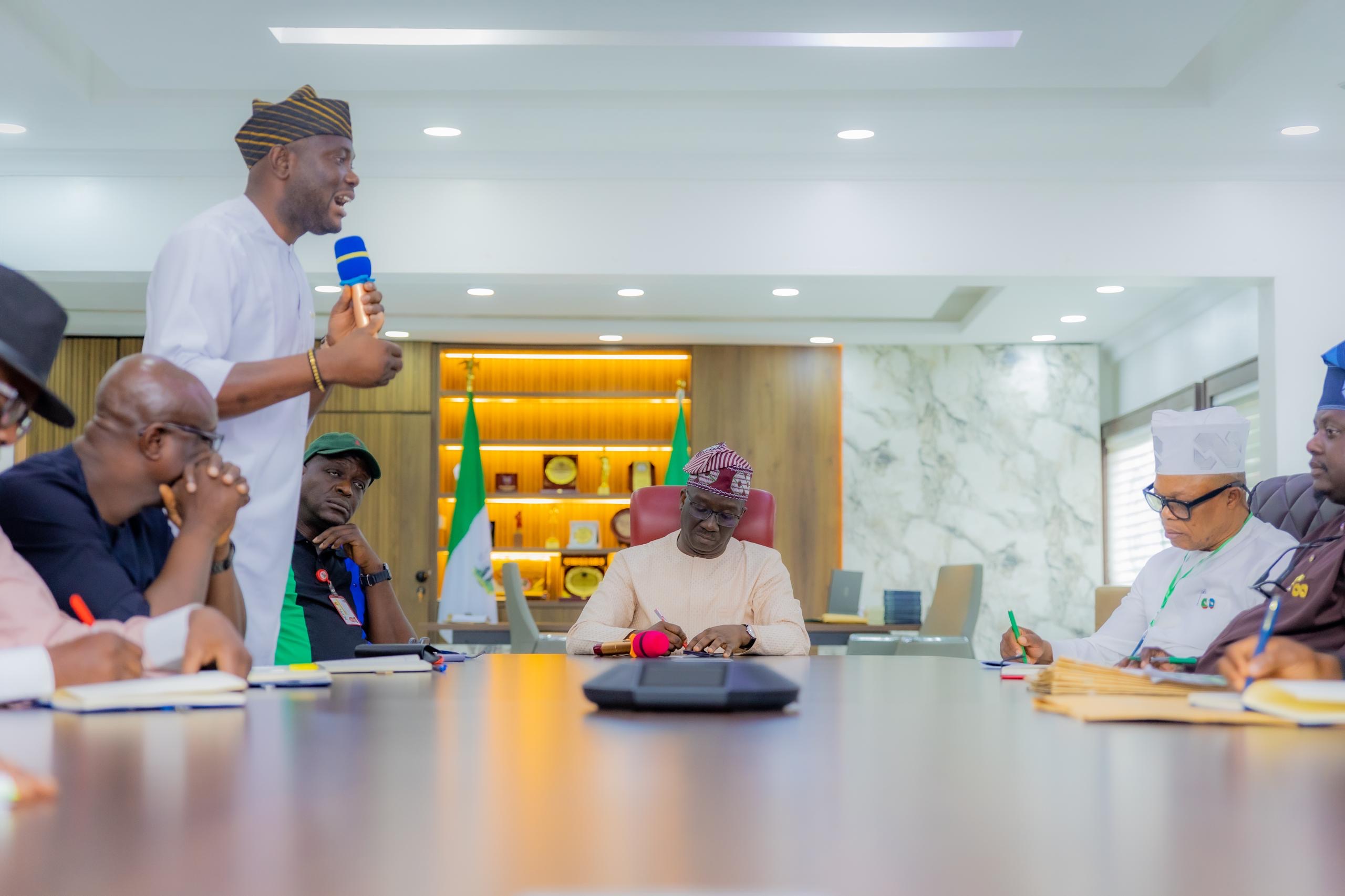
Benin City- Governor Monday Okpebholo on Tuesday presided over a stakeholders’ meeting on the electricity crisis in Edo State, calling for broader engagement across the power value chain to address lingering supply and billing concerns.
The meeting, held at Government House in Benin City, followed a recent peaceful protest by residents over prolonged outages, estimated billing and meter-related complaints.
Addressing participants, the governor stressed that the issues are complex and cannot be resolved in isolation.
“We need to call for a larger stakeholders’ meeting. I can see that we cannot get a solution now. Every reasonable person should understand that BEDC is not generating power. They are service providers. We need to also look at that aspect,” he said.
Okpebholo, who described himself as a telecom expert conversant with metering systems, explained that certain meter deductions complained about by residents are structured repayment mechanisms.
“Such deductions are meant to enable consumers run for a period before they start buying units, but they will gradually pay back. So they give you the opportunity to start using it and gradually you pay back. Please don’t be too worried about that,” he stated.
However, he maintained that the broader power challenge must be addressed holistically, calling for engagement with generation and transmission stakeholders.
“We need to solve the problem holistically. And Azura, we need to talk. I also want to appeal to Azura because the information I’m getting is that you are transmitting power to neighbouring states while Edo State is not getting enough. We need to find a solution to this problem totally,” the governor added.
The Managing Director/Chief Executive Officer of Benin Electricity Distribution Company (BEDC), Engr. Jonathan Lawani, said the absence of the Transmission Company of Nigeria (TCN) at the meeting underscored the interconnected nature of the electricity supply chain.
“See BEDC as a retailer who buys from another person. If he doesn’t sell to me, I can’t sell to Edo or any other state,” Lawani said, explaining that distribution companies depend on generation and gas supply to function effectively.
According to him, BEDC requires about 760 megawatts to adequately serve its franchise area but currently receives approximately 260 megawatts.
“As I speak today, what we are getting is 260 plus. So how do I share it?” he queried.
Lawani further clarified that electricity tariffs are regulated by the Nigerian Electricity Regulatory Commission (NERC), noting that BEDC lacks the authority to arbitrarily adjust rates.
On the Federal Government’s free meter initiative, he said the company collaborated to facilitate a World Bank-supported loan for meter procurement and has deployed thousands at no upfront cost, warning residents against patronising individuals who illegally sell or install meters.
Earlier, leader of the protesting group “Edo Against BEDC Oppression,” Comrade Ogbidi Emmanuel, said residents took to the streets over prolonged outages, estimated billing and alleged diversion of meters meant to be distributed free of charge.
Representatives of the Niger Delta Power Holding Company (NDPHC) and Azura Power West Africa Limited, alongside top Edo State officials, attended the meeting.
Governor Okpebholo directed that a larger stakeholders’ forum be convened to include all critical actors in the electricity value chain, assuring residents that his administration remains committed to improved power supply and fairness in service delivery.
Signed:
Dr. Patrick Akhere Ebojele Chief Press Secretary to the Governor of Edo State.