

2027 Is Coming; And So Is Nigeria’s Old Looting Playbook
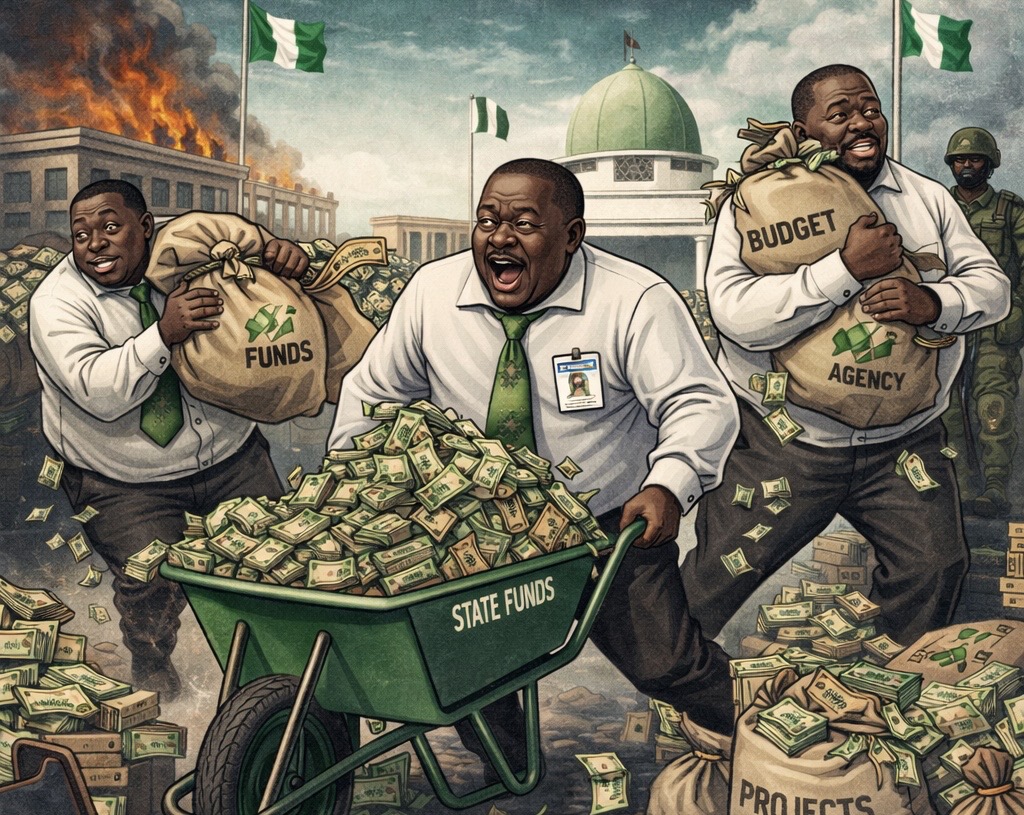
As the 2027 general elections approaches, Nigerians mush know it did not stumble into decline; it was marched there by policy choices, political indifference, and a decade of squandered opportunity. When the All Progressives Congress (APC) assumed power after the ouster of People’s Democratic Party (PDP) in 2015, it rode a wave of public anger against corruption and insecurity, promising discipline, reform, and national renewal. Ten years later, the country is poorer, more divided, and more insecure. This is not a partisan insult. It is a reckoning.
In 2015, Nigeria stood as Africa’s largest economy, buoyed by optimism and demographic promise. By 2025, it had slipped behind peers it once outpaced. The economy did not merely stall; it shrank in real terms. The naira collapsed through serial devaluations, inflation became chronic, and household purchasing power eroded relentlessly. For ordinary Nigerians, reform translated into higher fuel prices, costlier food, and vanishing savings without the compensatory growth or jobs that reform is meant to deliver.
Debt tells the story in sharper relief. Public borrowing expanded dramatically over the decade, not to build a competitive industrial base or invest in human capital, but largely to finance consumption and cover fiscal gaps. Today, debt servicing consumes a staggering share of government revenue, crowding out spending on health, education, and infrastructure. Nigeria is borrowing from its future to pay for its present, with little to show in productivity gains.
The APC’s signature promised anti-corruption, became its most enduring paradox. Corruption did not end; it evolved. High-profile cases were selective, institutions remained exposed to political pressure, and systemic leakages persisted through opaque subsidies, inflated contracts, and off-budget spending. The problem was not the absence of rhetoric, but the absence of consequences. Dare devilish looting by public servants running in Trillions of Naira. When accountability is performative rather than institutional, public trust collapses beyond redemption.
Security, another pillar of APC’s 2015 mandate, fared no better. Insurgency lingered in the North-East, banditry pillaging in the North-West, kidnappings spread nationwide, and communal violence deepened. Whole communities now live under fear, businesses flee, and investment withers. A state that cannot guarantee safety cannot credibly claim legitimacy. Security failures are not abstractions; they are daily taxes on life and commerce.
Institutions weakened as well. Executive dominance expanded, legislative nakedness political prostitution in internal party democracy withered, and politics became increasingly transactional. Governance drifted from strategy to improvisation, from competence to loyalty. The result is a brittle state loud on announcements and Press Releases which thin on delivery.
Supporters argue that reforms are painful but necessary, they suggest that subsidy removal and currency unification will yield long-term benefits. Perhaps. But reforms that ignore sequencing, social protection, and credibility invite backlash and deepen hardship. Reform is not shock therapy by decree; it is a contract with citizens. That contract was repeatedly breached.
As the 2027 elections approach, Nigeria faces a choice: normalize decline or arrest it. Stopping the bleeding requires more than changing faces, it demands changing rules, daring the untouchables, leadership by credibility and sacrificing through obedience.
First, fiscal discipline must be restored. Borrowing should be tied to productive investment with transparent reporting and enforceable limits. Wasteful subsidies explicit or hidden must give way to targeted social protection that cushions the poor while freeing capital for growth.
Second, diversification must move from slogan to strategy. Agriculture, manufacturing, and technology need policy consistency, power supply, logistics, and access to credit—not patronage. An economy built on imports and extraction cannot sustain a population of over 200 million. Besides who is panning for 300 million Nigerians and how are these plan been executed.
Third, anti-corruption must be institutional, not theatrical. Independent prosecutors, digitized procurement, lifestyle audits, and real penalties are non-negotiable. The rule of law must replace selective enforcement. A known criminal who has broken the law and abuse their offices, must not be seen around the corridors of power
Fourth, security reform must go beyond militarization. Intelligence-led policing, judicial efficiency, and local accountability are essential. Violence thrives where justice is absent. Punishment must not be selective no matter who is involved.
Finally, elections must mean choice again. Credible polls, internal party democracy, and issue-based campaigns are the minimum standard for legitimacy. Without them, politics becomes a ritual of recycled failure. There must be space for the young Nigerians and the old must guide them into it and allow them to thrive with vision tied to their experience.
“Let the looting begin” is not a slogan, it is a warning about what happens when power detaches from accountability and governance becomes entitlement. The APC’s decade in power, from 2015 to 2025, stands as a case study in lost potential. History will judge harshly. The only open question is whether Nigerians will.
Paul Okojie is a Media consultant.