

Breaking News: Military Take Over Benin Republic as Soldiers Announce Overthrow of Government
By Paul Okojie
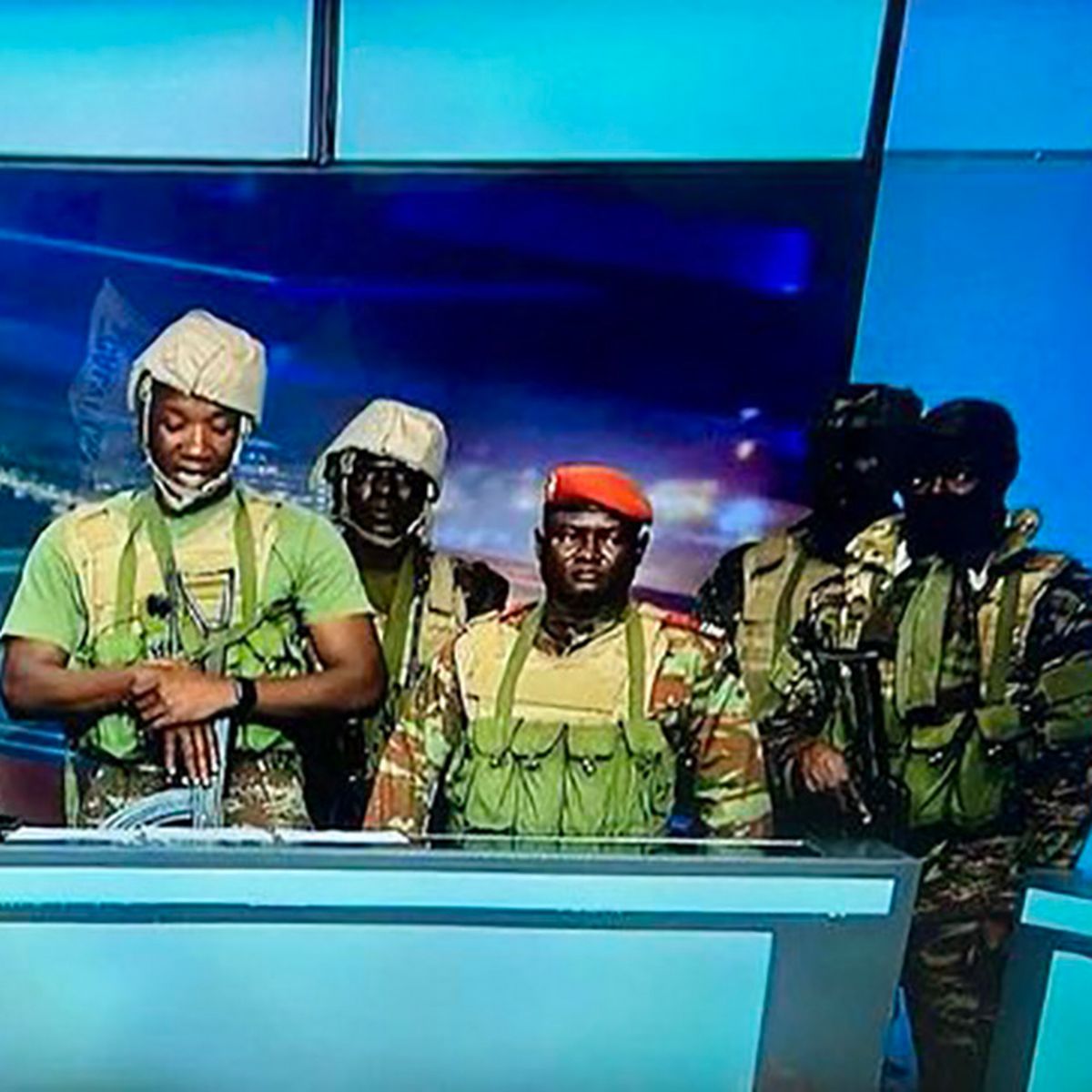
Benin Republic has been thrown into uncertainty after soldiers took over the state broadcaster in the early hours of Sunday, December 7, 2025, announcing that they had removed President Patrice Talon, dissolved all state institutions, and suspended the constitution.
The group, calling itself the Military Committee for Refoundation (CMR), declared Lt. Col. Pascal Tigri as the new head of state, ending nearly three decades of uninterrupted civilian rule in the West African country.
According to reports from Porto-Novo and Cotonou, gunshots were heard around the presidential residence shortly before dawn. The military faction then moved swiftly to seize the national television station, where masked soldiers read out a communique claiming they had taken power to “restore national stability and refound the republic.”
The whereabouts of President Patrice Talon remained unclear at the time of the broadcast, fueling speculation of either an escape, arrest, or negotiated surrender.
The takeover marks Benin’s first successful military coup since 1972, shattering its long-held reputation as one of West Africa’s most stable democracies. For decades, Benin had been viewed as a model of peaceful transfers of power, especially after its return to democracy in 1991.
But recent political tensions, including constitutional amendments that extended the presidential term, controversial arrests over an alleged 2024 coup plot, and growing dissatisfaction among segments of the security forces, had amplified fears of instability.
However, Benin known as Dahomey until 1975, was once one of Africa’s most coup-prone states. Between 1963 and 1972, the country saw at least six successful coups. The most defining was the 1972 takeover by Major Mathieu Kérékou, whose regime survived attempted coups and foreign-backed operations, including the famous French-mercenary invasion of 1977.
The democratic spring of the 1990s brought stability until now.
The Benin coup comes amid a troubling wave of military seizures across West Africa, including Mali, Burkina Faso, Niger, and Guinea. With the Economic Community of West African States (ECOWAS) already weakened by internal fractures, the region faces another test of its ability to respond to unconstitutional power grabs.
Early reactions from diplomatic observers suggest ECOWAS may struggle to impose meaningful sanctions, especially with several of its members already under military rule.
The nation is now in limbo for ordinary Beninese citizens, the immediate atmosphere is one of fear, confusion, and anxiety. Businesses remain closed in some parts of Cotonou, while military checkpoints have appeared across key roads.
The new junta has promised to “ensure security” and “begin national consultations,” but gave no timeline for elections or a return to democratic rule.
As the country waits for clarity on the fate of the ousted president and the intentions of the military rulers, Benin once a beacon of stability now confronts its most uncertain moment in half a century.