
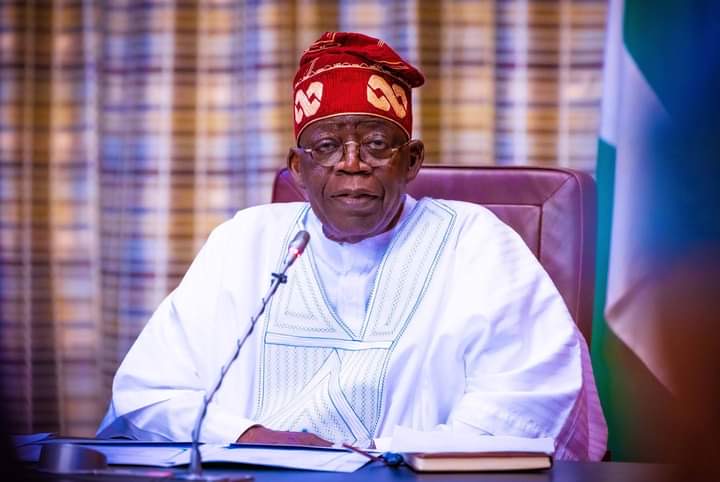
Tinubu’s New Tax Act: Nigerians Will Pay the Price for APC Government’s “Reform”

By Paul Okojie
The Nigeria Tax Act (NTA) 2025 has arrived with fanfare, branded as the long-awaited reform to simplify our chaotic tax system. APC Politicians call it “historic.” Consultants hail its alignment with global best practices. But behind the big grammar and glossy presentations lies a bitter truth: this law will hit ordinary Nigerians where it hurts mostly in their pockets, in their businesses, and in their daily survival.
The new tax system isn’t really progressive it’s a trapp that will cause serious ramifications for the peace and stability in Nigeria a case scenario of the Naira swap crisis in 2022/2023.
The government boasts that low-income earners will now enjoy a tax-free threshold of ₦800,000. Nice on paper, but let’s not deceive ourselves: how many Nigerians even earn that much? For the millions scraping by in the informal sector, this “relief” is meaningless.
Meanwhile, the middle class, the struggling professionals, civil servants, teachers, and nurses, will carry the real burden with tax rates climbing up to 25%. At a time when inflation is already stealing half their salaries, this is not reform; it is punishment.
However, one of the loudest headlines in the Act is the new 20% rent relief capped at ₦500,000. Again, let’s be honest. What does ₦500,000 mean in Lagos or Abuja, where average rents are in the millions? This so-called relief is crumbs tossed to a starving people. Worse, homeowners servicing mortgages, the very Nigerians trying to build stability are excluded entirely. It’s a policy designed by people who clearly don’t live in the Nigeria the rest of us endure.
The Forex Trap:
Perhaps the cruelest provision is the restriction that foreign currency expenses can only be deducted at the Central Bank’s official exchange rate. This is absurd. Businesses are forced daily to buy forex in the parallel market because the CBN simply cannot meet demand. Now, the law will punish them for that reality. The effect? Higher costs for importers, manufacturers, and traders — which will cascade down to higher prices of food, medicine, fuel, and every item in our markets.
Development Levy: A Tax By Another Name
Another sleight of hand is the so-called “development levy,” a flat 4% on company profits. Officials say it replaces multiple sectoral levies. But make no mistake — companies will not absorb this quietly. They will pass it to consumers. Bread will cost more. Transport will cost more. Even data bundles will cost more. When government taxes companies, ordinary Nigerians always pay the final bill.
Fuel Surcharge: Adding Salt to Wounds
A 5% surcharge on fossil fuels — excluding only kerosene, LPG, and CNG — is another hammer blow. Petrol and diesel will become more expensive. Transport fares will rise. Farmers will pay more to move produce to the markets. Families running small generators will pay more for electricity. This is the reality: every naira squeezed out of fuel will drain from the wallets of struggling Nigerians.
Incentives That Miss the Point;
The Act dangles a five-year tax holiday for agriculture and a 5% tax credit for “priority” investments. But let’s face it, these are token gestures. Investors who once enjoyed full pioneer status exemptions will now see little incentive to commit fresh capital. Government says it is shifting to a “performance-based” model. Investors will read it as “less attractive.” At a time when we desperately need jobs and industrial expansion, this is a misstep.
The Everyday Consequences:
When you strip away the rhetoric, the consequences are clear-
Salaries will stretch less.
Small businesses will drown in compliance costs.
Goods and services will become more expensive.
The middle class is Nigeria’s fragile economic backbone and it will shrink further.
And while this happens, government will pat itself on the back for “broadening the tax base.”
The Verdict
The Nigeria Tax Act 2025 is not reform for the people. It is reform for government coffers. It prioritises revenue over livelihoods, bureaucracy over simplicity, and foreign applause over local reality. The truth is this: until Nigeria’s leaders start designing laws with the lived experience of ordinary citizens in mind, every so-called reform will feel like another burden piled on the backs of the weary.
The NTA may have been born out of good intentions, but in execution, it risks becoming another cruel reminder that in Nigeria, it is always the poor and the struggling who pay for the government’s ambition.
A wise man will see trouble and hide from it, but a fool will walk right into it. Nigerians should not behave like sheeps going to the slaughter house happy.