Opinion: The 2009 Mahmoud Ahmadinejad Controversy: “Wipe Israel Off the Map” and the Global Backlash

Paulinus Ukeki
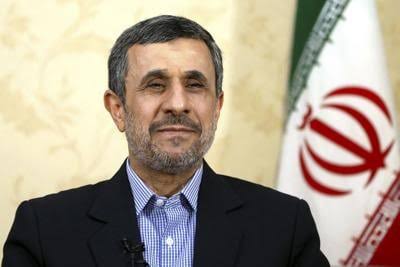
In 2009, former Iranian President Mahmoud Ahmadinejad reignited global controversy when he repeated sentiments widely interpreted as a call for the destruction of Israel. Though his remarks dated back to a speech first made in 2005, it was his reiteration of these views during his presidency that further isolated Iran on the world stage and intensified tensions in the Middle East.
Ahmadinejad, speaking at events such as the anti-Israel Quds Day and various state-backed forums, called for what he described as the “elimination of the Zionist regime,” a phrase that triggered alarm across the international community. Western leaders, particularly from the United States, the United Kingdom, and members of the European Union, condemned the statements as inflammatory, genocidal in tone, and a threat to international peace.
The original 2005 remark, often translated as “Israel must be wiped off the map,” came from a speech where Ahmadinejad quoted the late Ayatollah Khomeini. The Farsi phrase used was “Imam ghoft een rezhim-e esrâ’il bayad az safheh-ye ruzgar mahv shavad”, which more literally translates to: “The Imam said this regime occupying Jerusalem must vanish from the page of time.” Despite debates about translation accuracy, Ahmadinejad’s subsequent public statements reinforced the belief that his intentions were hostile toward the very existence of the Israeli state.
In 2009, amid Iran’s contentious presidential election and increasing global scrutiny over its nuclear ambitions, Ahmadinejad continued this narrative, referring to Israel as a “cancerous tumor” and encouraging Muslim nations to unite against the Zionist government.
The Global response to Ahmadinejad’s comments drew widespread condemnation. The United Nations, Western democracies, and human rights organizations denounced the rhetoric as hate speech and dangerous incitement. Israeli leaders responded with urgency, warning of Iran’s ambitions not only in words but in its pursuit of nuclear capabilities, which they believed could be used to carry out these threats.
The United States under President Barack Obama called for a “new beginning” with the Muslim world but remained firm on Iran’s accountability, especially regarding its inflammatory rhetoric and nuclear developments.
Ahmadinejad’s controversial posture placed Iran in a confrontational stance not just with Israel, but also with much of the international community. It further isolated Tehran diplomatically, led to tighter sanctions, and emboldened efforts to rally global pressure against Iran’s nuclear program.
Inside Iran, while many hardliners supported Ahmadinejad’s aggressive tone, moderates and reformists criticized the unnecessary provocation, arguing that it harmed Iran’s international reputation and economic interests.
In retrospect, Ahmadinejad’s remarks in 2009 remain a defining episode in Iran’s post-revolutionary foreign policy history—symbolizing its ideological hostility toward Israel and its resistance to Western influence in the Middle East.
Today, after almost sixteen years mare rhetorics have now become a reality. The hostilities between Israel and Iran is defined by the past that can no longer be overlooked. Now the world is wondering what’s next with the conflict?